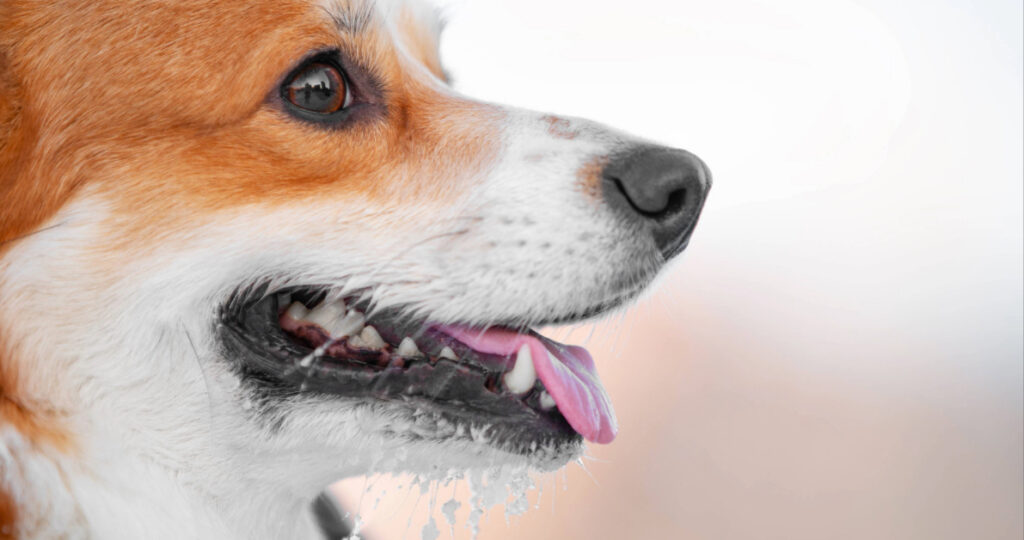
A little drool is part of life with a dog. But when you notice your dog drooling a lot more than usual, soaking their chest, leaving puddles on the floor, or dripping constantly, it’s natural to wonder if something is wrong. Excessive drooling in dogs can be a sign of anything from excitement and nausea to a serious medical condition. This guide from Best Friends Animal Hospital in Manchester, NH helps you understand why dogs drool, what causes a dog to drool too much, and when it’s time to call your vet.
Why Do Dogs Drool?
Drooling, or hypersalivation, is the production and release of saliva from the mouth. Saliva serves important functions in dogs, including lubricating food to make swallowing easier, beginning the digestive process, and helping to keep the mouth moist and healthy.
Some dogs drool more than others based on their anatomy. Breeds with loose, heavy jowls and lips, such as Bloodhounds, Saint Bernards, Mastiffs, Basset Hounds, and Newfoundlands, are physiologically prone to drooling. Saliva collects in those pendulous lip folds and spills out. For these breeds, heavy drooling is completely normal. For a Labrador or a Border Collie, though, suddenly drooling a lot is more likely to indicate a problem.
Why Is My Dog Drooling a Lot?
When a dog is drooling more than usual, there’s almost always an underlying trigger. Some causes are minor and short-lived, while others require prompt veterinary evaluation.
Nausea and Motion Sickness
One of the most common causes of a dog drooling excessively is nausea. Whether from car rides, eating something off, or gastrointestinal upset, nausea stimulates saliva production. Dogs may drool heavily before vomiting or even when they feel queasy without actually getting sick. If your dog drools a lot during car trips, motion sickness may be the culprit.
Dental Disease and Oral Pain
Dental disease is one of the leading causes of excessive drooling in dogs. Periodontal disease, broken teeth, oral ulcers, abscessed teeth, and gum infections all cause pain and inflammation that can trigger a significant increase in saliva production. If your dog is drooling too much and also showing reluctance to eat, pawing at the mouth, or bad breath, a dental exam at Best Friends Animal Hospital is a good next step.
Foreign Object in the Mouth or Throat
A bone fragment, stick, piece of toy, or other object lodged in the mouth, between teeth, or in the throat can cause sudden, severe drooling. Dogs in this situation may also paw at their face, gag, or show signs of distress. If you suspect your dog has something stuck in their mouth or throat, this warrants immediate veterinary attention.
Toxin Ingestion or Poisoning
Many household toxins, plants, medications, and chemicals can cause a dog to suddenly drool excessively. Certain plants like sago palm, azaleas, and lilies are toxic to dogs and can cause drooling alongside other serious symptoms. Insecticides, cleaning products, and some human foods can also trigger hypersalivation. If you suspect your dog has ingested something toxic, contact your veterinarian at Best Friends Animal Hospital or an animal poison control hotline immediately.
Anxiety and Stress
Dogs that are anxious, fearful, or stressed often drool more than usual. Thunderstorms, fireworks, separation anxiety, and new or unfamiliar environments can all trigger a stress response that includes increased salivation. If your dog drools a lot specifically during stressful situations and otherwise seems normal, anxiety may be the explanation.
Salivary Gland Problems
Salivary mucoceles (cysts caused by damaged salivary ducts), salivary gland infections, and salivary gland tumors can all cause a dog to drool too much. These conditions often require veterinary diagnosis through physical exam and imaging.
Is Excessive Drooling in Dogs an Emergency?
Excessive drooling in dogs is sometimes a veterinary emergency. Seek immediate care if your dog is drooling a lot and also showing any of the following:
- Sudden, severe drooling that came on quickly without obvious cause
- Swollen or distended abdomen
- Difficulty breathing or swallowing
- Pale or blue gums
- Seizures or muscle tremors
- Collapse or extreme weakness
- Known or suspected exposure to a toxin
- Suspected foreign object lodged in the mouth or throat
Sudden, unexplained hypersalivation is always worth taking seriously, especially when accompanied by other symptoms.
How Veterinarians Diagnose Excessive Drooling in Dogs
When you bring your dog to Best Friends Animal Hospital for excessive drooling, your veterinarian will start with a complete physical examination, including a thorough look inside the mouth. Because the mouth is often painful, sedation may be needed for a full oral exam.
Diagnostic Tools
Based on the physical exam findings and your description of the symptoms, the veterinarian may recommend the following diagnostics to identify the underlying cause:
- Dental X-rays: To evaluate tooth roots, bone loss, and abscesses not visible on the surface
- Blood work: To assess organ function and look for signs of infection, toxin exposure, or metabolic disease
- Urinalysis: To check kidney function and overall health
- Abdominal X-rays or ultrasound: If internal organ involvement is suspected
- Neck/throat imaging: If a salivary gland problem or foreign object deeper in the throat is suspected
- Toxicology screening: If poisoning is a possibility
Treatment of Excessive Drooling in Dogs
Treatment for a dog drooling too much depends entirely on the underlying cause. There is no universal remedy. Here’s how some of the most common causes are addressed:
Dental Disease
Dogs with dental disease typically need a professional dental cleaning under anesthesia, with extractions performed for any teeth that are damaged beyond repair. Once the source of oral pain and infection is treated, excessive drooling usually resolves.
Foreign Objects
Removal of the foreign object is the primary treatment. Your vet will also check for any secondary injury or infection caused by the obstruction.
Toxin Ingestion
Treatment varies based on the specific toxin involved and may include inducing vomiting, activated charcoal to reduce absorption, IV fluid support, and symptomatic care. Time is critical in poisoning cases.
Anxiety-Related Drooling
Managing anxiety in dogs often involves a combination of behavioral modification, environmental management, and sometimes anti-anxiety medications prescribed by your veterinarian. The team at Best Friends Animal Hospital can help create a comprehensive plan to support your dog’s emotional wellbeing.
Prevention of Excessive Drooling in Dogs
While you can’t always prevent a dog from drooling too much, there are steps you can take to reduce the risk of conditions that cause it.
- Schedule regular dental care: Annual professional cleanings and daily tooth brushing help prevent the dental disease that frequently drives excessive drooling.
- Keep toxins out of reach: Store cleaning products, medications, and toxic plants well away from areas your dog can access.
- Supervise chewing: Monitor your dog during chew sessions to reduce the risk of fragments becoming lodged in the mouth or throat.
- Address anxiety proactively: Work with your veterinarian on a behavioral and management plan if your dog shows signs of anxiety.
- Keep up with wellness exams: Regular checkups at Best Friends Animal Hospital allow for early detection of oral disease, salivary gland issues, and other conditions that can cause hypersalivation.
A Little Drool Is Fine. A Lot of Drool Deserves Attention.
Some dogs are just droolers, and that’s okay. But when your dog is drooling more than usual or the drooling came on suddenly, that’s a signal worth investigating. The team at Best Friends Animal Hospital in Manchester, NH is ready to help you figure out what’s behind your dog drooling too much and create a plan to get them feeling comfortable again. Give us a call at (603) 625-2378 to schedule an appointment today.