
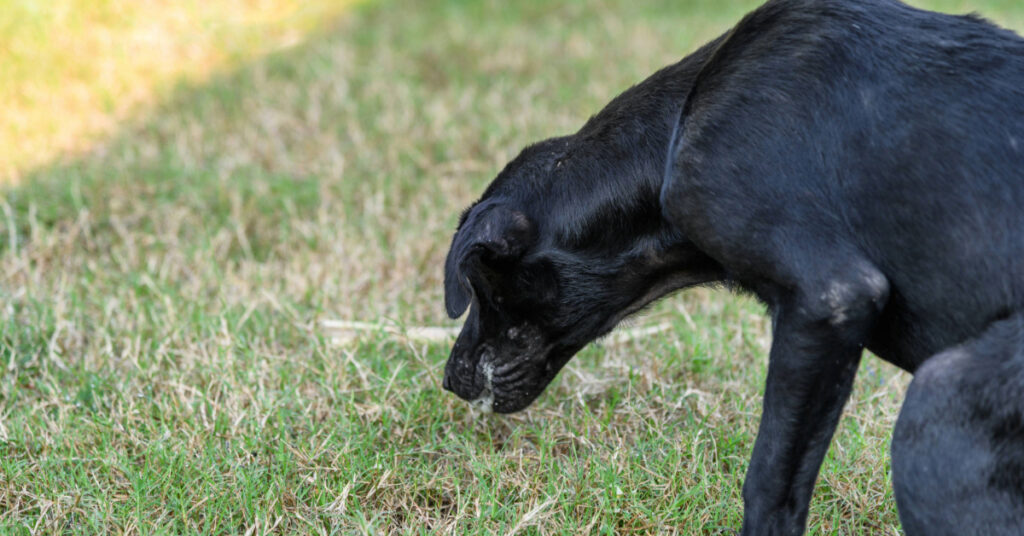
Discovering that your dog has vomited can be unsettling enough. But when that vomit is white and foamy, many pet owners aren’t sure what to think. Dog vomiting white foam is actually one of the more common reasons people call their veterinarian, and the causes range from minor and easily resolved to serious and requiring prompt care. This guide explains what it means when a dog throws up white foam, what conditions are most often responsible, and when you need to get to Best Friends Animal Hospital in Manchester, NH right away.
What White Foam Vomit Means
When a dog vomits white foam, it typically means the stomach or upper gastrointestinal tract is irritated, inflamed, or empty. The foamy, white appearance comes from stomach acid or mucus mixing with air during the vomiting process. In some cases, the foam originates from the esophagus rather than the stomach itself. Dog vomiting white foam is not a diagnosis on its own. It’s a symptom, and the underlying cause is what determines how serious the situation is.
Vomiting vs. Regurgitation
It’s worth distinguishing between vomiting and regurgitation. Vomiting is an active, forceful process that involves abdominal contractions. Regurgitation is passive, with undigested food or liquid coming back up with little effort. White foam is more commonly associated with true vomiting, but knowing which is happening can help your veterinarian narrow down the cause.
Common Reasons a Dog Throws Up White Foam
There are several conditions that can cause a dog to vomit white foam. Some are mild and short-lived, while others require immediate veterinary attention.
Bilious Vomiting Syndrome
Bilious vomiting syndrome is one of the most common reasons a dog throws up white foam or yellow foam in the morning. It occurs when bile from the small intestine flows back into the stomach overnight when the stomach is empty. This irritates the stomach lining and triggers vomiting. Dogs with bilious vomiting syndrome typically vomit first thing in the morning before eating and then feel fine for the rest of the day. Feeding a small snack before bedtime often helps prevent episodes.
Indigestion or Dietary Indiscretion
Dogs are notorious for eating things they shouldn’t, from table scraps to garbage to items found on the ground. When a dog eats something that doesn’t agree with them, the stomach may respond by expelling the contents. Dog vomiting white foam after eating something unusual is often a sign of simple indigestion. Most cases resolve on their own within 24 hours, but recurring episodes warrant a vet visit.
Kennel Cough
Kennel cough is a contagious respiratory infection that causes a harsh, hacking cough. After a coughing fit, some dogs gag or retch, which can result in the expulsion of white foam. This is not true stomach vomiting but can look very similar. If your dog has recently been boarded, visited a dog park, or had contact with other dogs and is now coughing and occasionally producing white foam, kennel cough is a strong possibility.
Pancreatitis
Pancreatitis, or inflammation of the pancreas, is a more serious condition that commonly causes vomiting in dogs. A dog with pancreatitis may vomit repeatedly, including white foam, and often shows additional signs such as abdominal pain, hunched posture, loss of appetite, and lethargy. Pancreatitis can range from mild to life-threatening and requires veterinary diagnosis and treatment.
Bloat (Gastric Dilatation-Volvulus)
Bloat, medically known as gastric dilatation-volvulus (GDV), is one of the most dangerous conditions that can cause a dog to vomit white foam. GDV occurs when the stomach fills with gas and twists on itself, trapping the contents inside and cutting off blood supply. Dogs with bloat may retch repeatedly and produce only small amounts of foam or nothing at all because the stomach is obstructed. This is a life-threatening emergency. If your dog has a distended abdomen, is retching without producing vomit, is restless, or is in apparent distress, get to a veterinary emergency clinic immediately.
When to Call Your Vet
Not every episode of white foam vomit requires an emergency visit, but there are clear situations where waiting is not an option. Contact Best Friends Animal Hospital right away if your dog is vomiting white foam and also showing any of the following signs:
- Distended or hard abdomen
- Repeated, unproductive retching
- Signs of pain, such as whining, hunching, or restlessness
- Blood in the vomit
- Extreme lethargy or collapse
- Vomiting that continues for more than 24 hours
- Loss of appetite lasting more than a day
- Known or suspected ingestion of a toxic substance
What to Tell Your Vet
When you call or visit the clinic, having detailed information ready will help your veterinarian respond quickly and effectively. Try to note:
- How many times your dog has vomited and how long it’s been happening
- What the vomit looked like, including color, consistency, and whether there was food or blood present
- Whether your dog has eaten recently and what they ate
- Any changes in behavior, energy level, or appetite
- Whether your dog could have gotten into anything toxic or unusual
- Any relevant medical history, including prior digestive issues
Diagnosing the Cause
At Best Friends Animal Hospital, diagnosing the cause of a dog vomiting white foam typically starts with a thorough physical examination. Depending on what your veterinarian finds, diagnostics may include blood work to assess organ function and check for infection or inflammation, abdominal X-rays or ultrasound to evaluate the stomach and surrounding structures, and fecal testing to rule out parasites. Treatment will depend on what’s causing the vomiting, ranging from a bland diet and supportive care for minor indigestion to IV fluids, medications, or surgery for more serious conditions.
When Your Dog’s Stomach Speaks Up, Listen
A dog vomiting white foam once and acting totally normal afterward is usually not cause for alarm. But repeated episodes, additional symptoms, or anything that just doesn’t feel right are all good reasons to call your vet. The team at Best Friends Animal Hospital in Manchester, NH is here to help you sort through the concern and get your dog feeling better. Call (603) 625-2378 today! We’d rather you call and find out it’s nothing than wait when it’s something that needs care.