
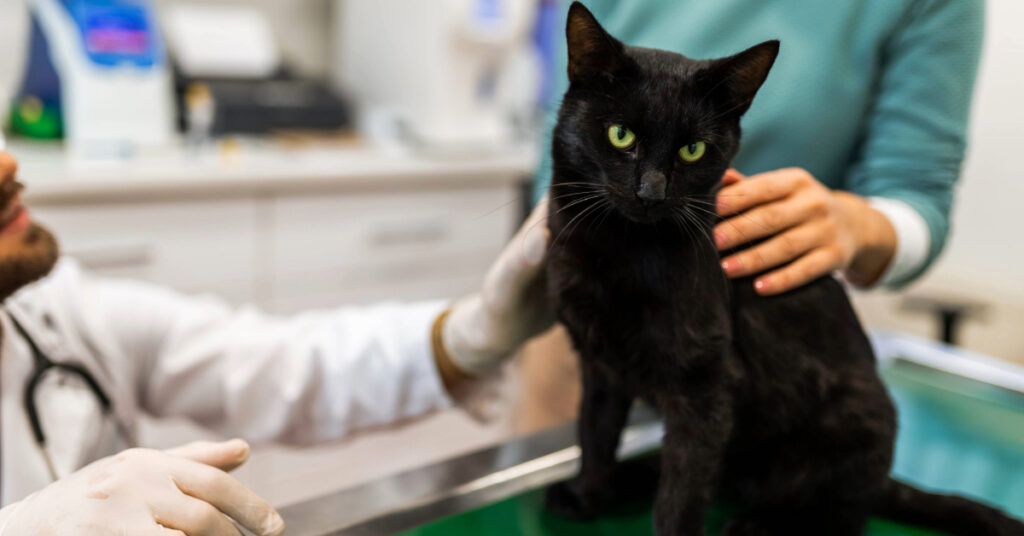
If you’ve ever heard your cat making a hacking, wheezing, or honking sound, you know how alarming it can be. Cat coughing isn’t something pet owners should automatically dismiss as a hairball and move on. While occasional coughing in cats can be perfectly normal, frequent or severe cat coughing may signal an underlying health issue that needs professional attention. This guide will help you understand what cat coughing is, what causes it, and when it’s time to call Best Friends Animal Hospital in Manchester, NH.
What Is Cat Coughing?
Cat coughing is a reflex action that clears irritants, mucus, or foreign objects from the airway. It’s a protective mechanism, but it can also be a symptom of disease. When a cat coughs, you’ll typically notice a crouching posture with the neck extended, followed by a forceful exhalation of air. Some owners confuse this with vomiting or retching, but coughing is distinctly a respiratory event rather than a gastrointestinal one.
Coughing in cats can be acute (sudden and short-lived) or chronic (lasting more than a few weeks). Chronic cat coughing nearly always warrants a veterinary evaluation, even if each individual episode seems mild.
Coughing vs. Retching vs. Sneezing
It’s easy to mix these up. Sneezing originates in the nasal passages, while coughing comes from the lower airways. Retching usually ends with vomiting or the expulsion of a hairball. True coughing in cats rarely produces material and instead results in a honking or wheezing sound with a forceful outburst of air. Understanding the difference helps you accurately describe what’s happening when you talk to your veterinarian.
Why Is My Cat Coughing?
There are many reasons a cat may cough, ranging from minor irritations to serious medical conditions.
Hairballs
Hairballs are one of the most common triggers of coughing and retching in cats. As cats groom themselves, they swallow loose fur, which can accumulate in the stomach and need to be expelled. Most hairball episodes resolve on their own, but if your cat is coughing frequently without producing a hairball, something else may be going on.
Feline Asthma
Feline asthma is one of the most common causes of chronic cat coughing. It occurs when the airways become inflamed and constricted, often in response to environmental allergens like dust, smoke, mold, or pollen. Cats with asthma typically have recurring coughing episodes that may be accompanied by wheezing or labored breathing.
Upper Respiratory Infections
Just like people, cats can get respiratory infections caused by viruses or bacteria. Common culprits include feline herpesvirus and calicivirus. These infections often cause sneezing, nasal discharge, and coughing in cats simultaneously. Kittens, senior cats, and immunocompromised cats are especially vulnerable.
Heartworm Disease
Heartworm disease affects cats differently than dogs, but it can still cause serious respiratory symptoms, including coughing. Cats with heartworm-associated respiratory disease (HARD) may show chronic coughing, difficulty breathing, and vomiting. This is a serious condition that requires prompt veterinary diagnosis.
Other Causes of Cat Coughing
- Lungworms or other parasites
- Pleural effusion (fluid around the lungs)
- Pneumonia
- Inhaled foreign objects
- Heart disease
What To Do If Your Cat Is Coughing
If your cat is coughing, the first step is to observe the situation carefully before calling your vet. Note how often the coughing occurs, how long each episode lasts, and whether any other symptoms are present.
Signs That Can Wait for a Scheduled Appointment
- An isolated coughing episode with no other symptoms
- Occasional coughing that resolves quickly and doesn’t repeat
- Known hairball issues with expected retching sounds
- A mild, intermittent cough in an otherwise healthy, active cat
Signs That Require Immediate Veterinary Attention
Some forms of cat coughing constitute a veterinary emergency. Seek care right away if your cat shows any of the following:
- Open-mouth breathing or panting
- Blue or pale gums (a sign of oxygen deprivation)
- Rapid, labored, or very shallow breathing
- Coughing up blood
- Extreme lethargy or inability to stand
- Sudden onset of severe, continuous coughing
These symptoms indicate that your cat may not be getting enough oxygen, which is a life-threatening situation requiring emergency care.
Diagnosing Cat Coughing
When you bring your coughing cat to Best Friends Animal Hospital, our veterinary team will perform a thorough physical examination and gather a detailed history. Accurate diagnosis is essential because the cause of cat coughing determines the treatment approach.
Physical Examination
Your veterinarian will listen to your cat’s lungs and heart with a stethoscope, checking for abnormal sounds like wheezing, crackling, or muffled breath sounds. They’ll also assess your cat’s respiratory rate, effort, and overall body condition.
Diagnostic Testing
Depending on the findings during the physical exam, your vet may recommend one or more of the following diagnostic tools:
- Chest X-rays: To evaluate the lungs, heart, and chest cavity for fluid, masses, or inflammation
- Blood work: A complete blood count and chemistry panel to assess overall health and check for infection
- Fecal testing: To rule out lungworms or other parasites
- Heartworm testing: Using a blood test or antigen test to detect heartworm disease
- Bronchoscopy: A minimally invasive procedure to examine the airways directly
Cat Coughing Treatment
Treatment for cat coughing depends entirely on the underlying cause. There is no one-size-fits-all answer, which is why an accurate diagnosis is so important.
Feline Asthma Treatment
Cats diagnosed with feline asthma are typically managed with corticosteroids to reduce airway inflammation. Some cats receive bronchodilators to help open the airways during acute episodes. Many cats use an inhaler specifically designed for cats, delivered through a small mask. Managing environmental triggers, like eliminating cigarette smoke, strongly-scented cleaning products, or dusty litter, is also a critical part of long-term asthma management.
Infection Treatment
Upper respiratory infections caused by bacteria may be treated with antibiotics. Viral infections are typically managed with supportive care, including fluids, nutritional support, and sometimes antiviral medications. Cats with secondary bacterial pneumonia may require hospitalization and more aggressive treatment.
Parasite and Heartworm Treatment
Lungworms and other parasites are usually treated with appropriate anti-parasitic medications. Heartworm disease in cats is managed differently than in dogs since there is no approved adulticidal treatment for cats. Instead, cats are managed with supportive care and anti-inflammatory medications to control symptoms while the body clears the infection over time.
Your Cat’s Breathing Deserves a Second Look
Cat coughing is never something to brush aside without a second thought. Whether it’s happening once a week or several times a day, a coughing cat is telling you something needs attention. The team at Best Friends Animal Hospital in Manchester, NH is here to help you get to the bottom of it with compassionate, thorough veterinary care. If your cat is coughing and you’re not sure whether to wait or come in, give us a call at (603) 625-2378. We’ll help you make the right call for your cat’s health.