
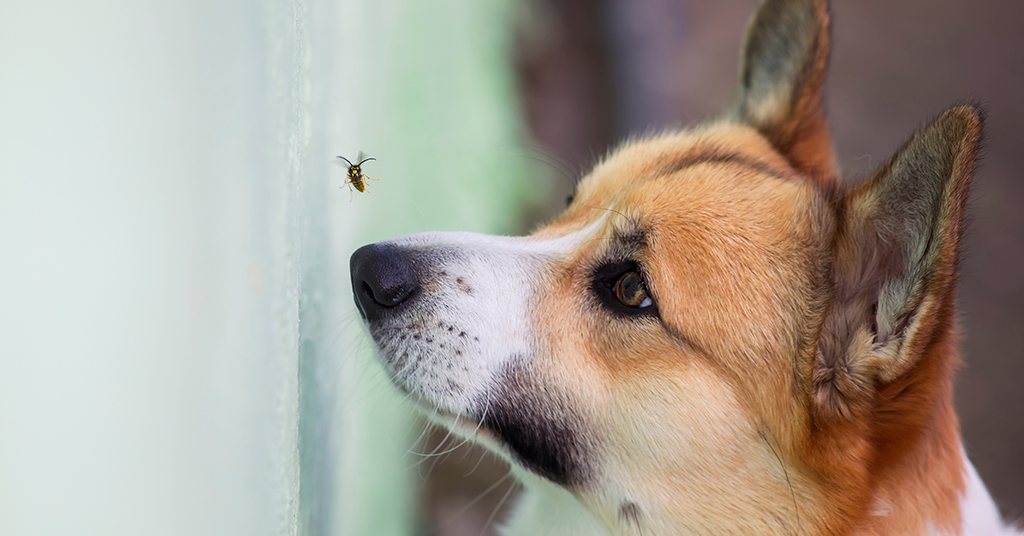
If your dog gets stung by bee, move them away from the insects, watch closely for swelling or trouble breathing, and call your veterinarian for guidance. Most stings cause mild, short-lived pain and swelling, but stings to the mouth or throat, multiple stings, or an allergic reaction can become emergencies within minutes. Curious noses and snapping jaws make dogs natural targets for bees, especially during New Hampshire summers when gardens, lawns, and clover patches are buzzing. Knowing what a normal reaction looks like, and which signs mean you need help right away, allows you to act calmly and quickly. In this guide, our team at Best Friends Animal Hospital in Manchester, NH explains how to recognize a sting, the steps to take in the first few minutes, when facial stings need extra attention, and why your veterinarian should guide any medication decisions for a dog stung by bee.
Signs and Symptoms of a Bee Sting in Dogs
With a dog stung by a bee, you may not see the sting happen, so recognizing the aftermath is often how owners discover the problem.
Most stings land on the face, nose, mouth, or paws, since those are the parts dogs use to investigate or swat at insects. Common signs include:
- Sudden yelping, whining, or jumping away from something in the grass
- Localized swelling, redness, or a raised bump
- Pawing at the face or rubbing the muzzle along the ground
- Licking or chewing at a paw, or limping on one leg
- Drooling, especially after snapping at a flying insect
- A small black stinger visible in the skin
Honeybees leave their barbed stinger behind, while wasps, hornets, and yellow jackets can sting repeatedly without leaving one. Either way, the symptoms of a dog stung by a bee or wasp tend to look similar in the first several minutes, which is why careful observation matters so much.
What to Do Right After a Bee Sting
The first few minutes after your dog is stung by a bee set the tone for how smoothly things go. Follow these steps in order:
Step 1: Move Away From the Insects
Calmly lead your dog away from the area to prevent additional stings. A nest in the ground or under a deck can release many insects at once, and multiple stings raise the risk of a serious reaction.
Step 2: Check Your Dog Over
Look at the face, mouth, and paws for swelling or a visible stinger. Note where the sting happened and the time, since your veterinarian will want both details.
Step 3: Call Your Veterinarian
Even if your dog seems fine, a quick call lets your veterinary team advise you on next steps, including how to handle a stinger that is still in place, based on your dog’s size, health history, and the sting location.
Step 4: Monitor for at Least 24 Hours
Most reactions appear within 30 minutes, but some develop hours later. Keep your dog close and watch for any change in breathing, energy, or swelling.
What If Your Dog Is Stung on the Head, Mouth, or Nose?
Location matters a great deal when a dog is stung by a bee. Stings around the face and airway deserve faster attention than a sting on a paw.
Why Facial Stings Are Riskier
The tissues of the muzzle, lips, and eyelids swell easily, and that puffiness can look dramatic. A sting on the nose or face usually causes visible swelling within minutes. More concerning are stings inside the mouth or throat, which often happen when a dog snaps a bee out of the air. Swelling in these areas can narrow the airway and make breathing difficult.
Signs That Need Immediate Help
If your dog swallowed a bee or was stung in the mouth, watch for gagging, repeated swallowing, heavy drooling, a change in bark, or noisy breathing. Any of these signs means you should head to your veterinarian or the nearest emergency hospital right away, rather than waiting to see whether the swelling goes down on its own. Flat-faced breeds, whose airways are already narrow, are at particular risk.
Anaphylactic Bee Reactions in Dogs
Anaphylaxis is a severe, whole-body allergic reaction, and it is the most dangerous outcome for a dog stung by bee.
How Anaphylaxis Develops
In an allergic dog, venom triggers the immune system to release chemicals that can cause blood pressure to drop and airways to swell. Reactions usually begin within minutes to an hour of the sting. A dog does not need to have reacted before to have a severe reaction now, and dogs that react once may react more strongly to future stings.
Symptoms of a Severe Allergic Reaction
Anaphylaxis is a life-threatening emergency. Signs include sudden vomiting or diarrhea, pale gums, weakness, difficulty breathing, hives across the body, facial swelling far beyond the sting site, confusion, and collapse. If you see any of these signs, get your dog to a veterinary hospital immediately. Call ahead while you are on the way so the team can prepare for your arrival.
Signs You Should Take Your Dog to the Vet
Not every sting needs an office visit, but certain situations always call for professional care.
Seek veterinary attention for a dog stung by a bee when:
- The sting is inside the mouth or throat, or your dog swallowed the insect
- Your dog was stung multiple times or disturbed a nest
- Swelling keeps spreading or affects the eyes or airway
- Hives, vomiting, weakness, or breathing changes appear
- Your dog is very small, a puppy, a senior, or has existing health conditions
- The sting site looks infected days later, with discharge, heat, or worsening pain
When a small dog is stung by a bee, they receive a larger venom dose relative to their body weight, so even a single sting can have a bigger impact on them than on a larger breed.
How to Care for Your Dog at Home After a Bee Sting
Home care for a dog stung by bee is mostly about observation and comfort, while your veterinarian directs any actual treatment.
Follow Your Veterinarian’s Instructions
Your veterinary team may recommend specific steps for comfort or swelling based on where your dog was stung and how they are responding. Following that tailored advice is safer than trying remedies found online, since some popular home treatments can irritate skin or be harmful if licked.
Watch and Limit Licking
Offer a quiet place to rest and fresh water, and discourage your dog from scratching or chewing the area. Check the sting site several times over the next day or two. Mild swelling typically improves within a day, so swelling that grows, spreads, or lingers is a reason to call back.
Should I Give My Dog Antihistamines for a Bee Sting?
Many pet owners have heard that antihistamines can help a dog stung by a bee, but you should never give one without speaking to your veterinarian first.
Why Veterinary Guidance Matters
The appropriate medication and amount depend on your dog’s weight, age, health conditions, and current medications. Some over-the-counter allergy products also contain added decongestants or other ingredients that are toxic to dogs. An antihistamine will not stop anaphylaxis on its own, so relying on one during a severe reaction can delay the emergency care your dog truly needs.
Plan Ahead for Allergic Dogs
If your dog has reacted to a sting before, ask your veterinarian about an emergency plan for future stings. They can recommend what to keep on hand and when to seek care, so you are ready the next time bees are out.
Speak to Your Veterinarian If You Have Any Concerns
A dog stung by a bee is a common sight during summer, and for most adventurous pups the sting is a minor, if uncomfortable, event. Still, the difference between a mild reaction and an emergency can unfold quickly, so calling your veterinarian is always a reasonable first move. Facial and mouth stings, multiple stings, and any signs of an allergic reaction deserve prompt professional care.
If your dog gets stung by a bee, our team at Best Friends Animal Hospital is ready to help you decide on next steps and to examine your dog when needed. We can also talk with you about allergy planning for dogs who have reacted in the past. To reach our team, call Best Friends Animal Hospital in Manchester, NH at (603) 625-2378. For after-hours emergencies, contact your nearest emergency veterinary hospital right away.